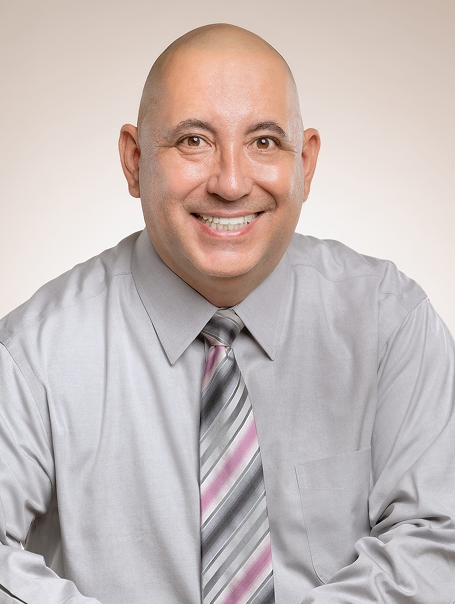
Meet Dr. Marco Rabines
Dr. Marco Rabines is a highly respected, bilingual (Spanish/English), board-certified psychiatrist and a diplomate of the American Board of Psychiatry and Neurology, known for delivering thoughtful, comprehensive, and deeply personalized psychiatric care. Serving patients throughout the Bradenton – Sarasota – Tampa – Orlando region of Florida, Dr. Rabines is widely recognized for an approach that goes far beyond symptom control. His clinical philosophy integrates expert medication management with psychotherapy, lifestyle optimization, spirituality, physical activity, and social context — treating not just diagnoses, but the whole human being behind them.
Dr. Rabines earned his medical degree from the Universidad Autónoma de Guadalajara in Mexico in 1994 and went on to complete advanced specialty training in Anesthesiology at the Universidad de San Martín de Porres in Lima, Peru, in 2001. After relocating to the United States in 2006, he pursued a second medical specialty in Psychiatry, completing his residency at the Ponce School of Medicine in Puerto Rico in 2011. This dual specialty background gives him a uniquely broad medical perspective, with a deep understanding of both the biological and psychological dimensions of mental health.
Over the course of his career, Dr. Rabines has trained and practiced extensively in diverse psychiatric hospital settings across Puerto Rico and Florida, gaining substantial experience in treating complex mood disorders, anxiety disorders, psychotic illnesses, and co-occurring medical and psychiatric conditions. Through this work, he developed a keen insight into one of the most persistent challenges in psychiatry: fragmented care that focuses narrowly on crises rather than long-term recovery. In response, Dr. Rabines has intentionally emphasized high-quality outpatient care that prioritizes continuity, prevention, and sustainable wellness.
By focusing on outpatient treatment, Dr. Rabines helps patients remain connected to their families, social supports, and meaningful daily activities — key factors often overlooked in traditional models of care. His goal is not only symptom improvement, but long-term stability, personal growth, and empowerment. Patients under his care are encouraged to reclaim their roles within their families and communities, pursue fulfilling interests, and build lives defined not by illness, but by purpose, resilience, and connection.